
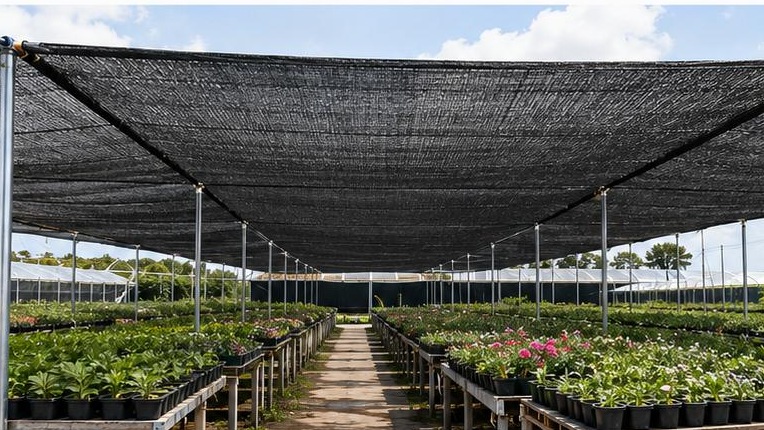
Start with the dimensions of each area to be covered. For a regular rectangle, multiply width by length using the same unit; sketch irregular or multi-panel areas separately. Net coverage area is not a confirmed production quantity. Roll width, finished panel dimensions, hems, joining and fixing details must be checked against the supplier's drawing and the approved order.
Separate coverage area from order quantity
A useful shade net quantity calculation keeps three figures apart: the net area to cover, the supply format you want, and the number and size of rolls or finished panels. For a regular rectangular area, multiply its measured width by its length, using the same unit for both. This is a planning measure for the site; it does not define the factory's cut plan, finished dimensions or quotation basis.
When several roof bays, fence sections or other zones are involved, list them separately and give each one a name or number. Do not combine different shapes, colors or specifications into a single area total unless the supplier confirms that the same product and processing apply to all of them.
Measure every zone and keep a drawing
Record the boundaries that need to be covered, the measurement unit, the direction of each span and the position of the planned support or fixing edges. Keep a sketch for sloped, irregular or joined areas so the installer and supplier can see how the dimensions relate to the site. The person responsible for installation should confirm the measurement basis and fixing plan.
If the dimensions were taken in centimeters or millimeters, convert them before calculating and retain the converted unit in the order sheet. This simple step prevents a width written in meters from being multiplied by a length written in centimeters.
Choose rolls or finished panels
If you need roll material for your own cutting, tell Jinhongyuan the coverage plan, the requested roll width and length, the quantity by roll, and any direction or color requirement. The supplier must confirm the available product specification and dimensions for the actual order; an area total alone does not identify which roll format you need.
If you want finished panels, list the required finished width and length after edge processing, plus the number of pieces for each size. Show which edges need hems, whether grommets or other fixing details are required, and whether the quoted dimensions refer to the cut material or the finished panel. The hemmed shade net with grommets product page shows the catalog format; the order drawing controls the requested construction.
Confirm overlaps and processing allowances
There is no single allowance that should be copied into every shade net order. Cutting direction, roll width, hems, joining, grommet layout and the site's fixing method can change the amount of material needed. Send the drawing and size schedule to the supplier and ask for the proposed cut plan, finished dimensions and calculation basis in writing. Mark unknown details as questions instead of adding an unsupported percentage.
If your project has a shade-rate or other technical requirement, identify the product, measurement basis and supporting document that apply. A product photo or the appearance of the mesh does not confirm shade rate, performance or suitability for a particular installation.
Prepare a comparable RFQ
Include these details in the request:
- Intended use and a numbered sketch of each coverage zone.
- Measured dimensions, units and the measurement basis.
- Supply format: rolls or finished panels, with quantity by size.
- Product or sample reference and any technical requirement to confirm.
- Hem, joining, grommet, accessory, label and packing requirements.
- Destination and any open measurement or processing questions.
You can write: “Application and coverage zones: ____; drawing and units: ____; supply format: rolls / finished panels; requested sizes and quantity by size: ____; edge and fixing details: ____; please return the available specification, cut plan and items that need confirmation; destination: ____.” The shade net RFQ checklist covers the other quote fields.
Check how the quote calculates quantity
Before approval, compare the product name, dimensions, unit, roll or panel format, processing, number of pieces, packing and destination. Ask whether the quoted area means site coverage, nominal roll area or finished-panel area. Keep the approved drawing, sample reference and size schedule together so an estimate is not mistaken for a confirmed production specification.
This guide helps organize measurement and sourcing information. It does not set a universal cutting allowance, promise a specific shade result or replace site installation planning.